
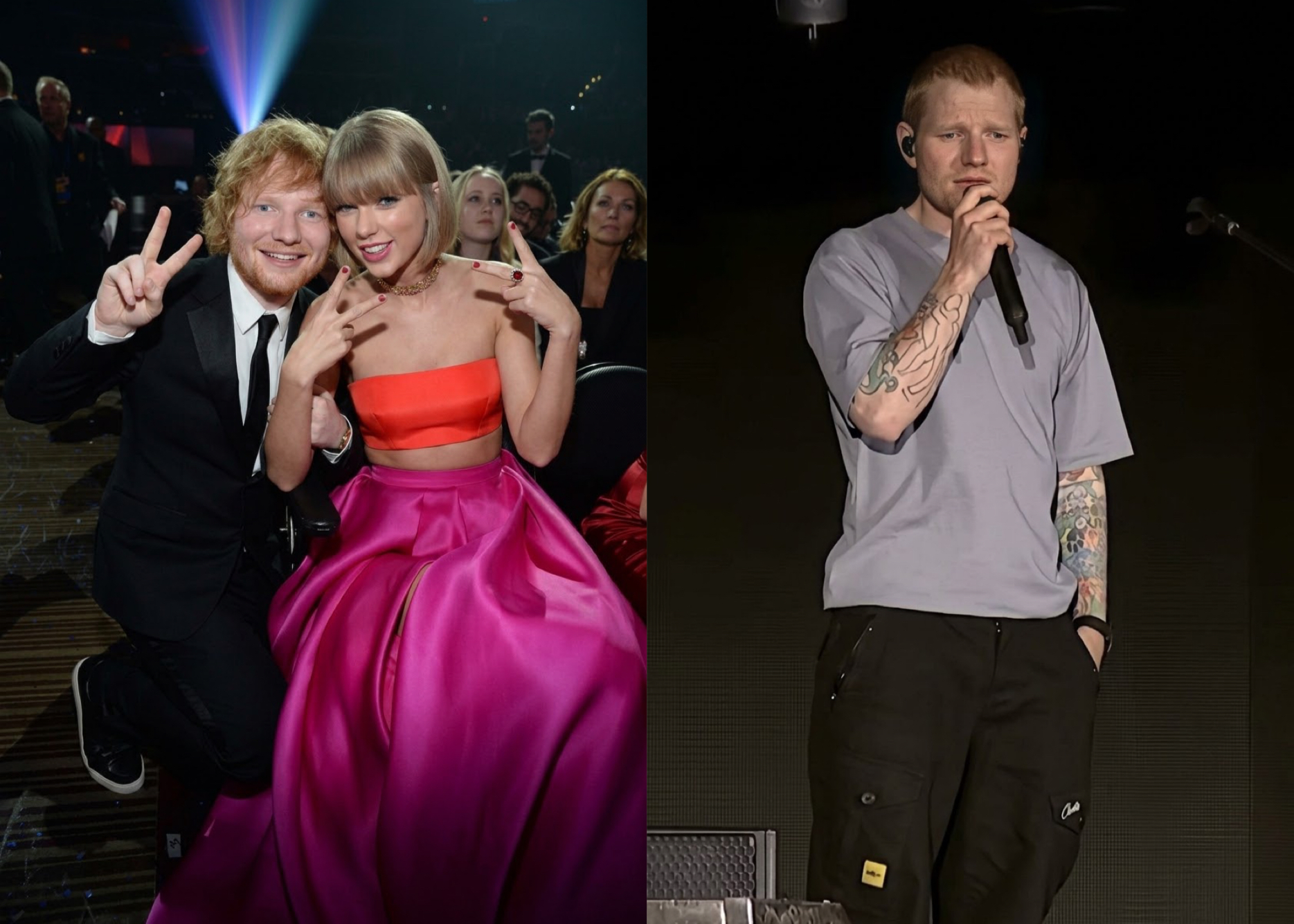
Ed Sheeran’s Philadelphia Speech — And the Taylor Swift Question Nobody Can Confirm
Ed Sheeran’s recent show in Philadelphia was supposed to be another night on a long-running tour. Instead, it became a defining moment. In front of thousands of fans, Sheeran paused the music, fought back tears, and delivered a rare political speech about the humanitarian catastrophe in Gaza. It was a break from his usual onstage persona – and a turning point in how his tour, and his silence up to this point, were being discussed.
There is no confirmed public record that Taylor Swift personally contacted Sheeran after the show. No direct quotes, no named sources, no on-the-record confirmation. What is known – and what fans keep returning to – is the depth and visibility of their long friendship. That history, combined with the intensity of Sheeran’s speech, has fueled speculation about how the biggest pop star in the world may be privately supporting one of her closest musical collaborators.
What we do know for certain is what happened onstage in Philadelphia – and why it matters.
Ed Sheeran’s Philadelphia speech, in focus
At the Philadelphia stop of his tour, Sheeran took several minutes between songs to address the crowd, shifting abruptly from performance to reflection. He spoke about the scale of death and displacement in Gaza and about civilians, especially children, bearing the brunt of the conflict. He described what is happening as “unjustifiable,” making it clear he was no longer comfortable avoiding the subject.
Audience videos from the night show a stadium that initially fell into a tense, listening silence. As Sheeran’s voice cracked and he struggled to steady himself, pockets of the crowd began applauding and shouting encouragement. By the time he finished, the reaction had turned into a sustained roar – a mix of support for his vulnerability and relief that someone at his level was finally saying something.
For an artist whose shows typically orbit storytelling, romance and personal confession rather than geopolitics, the moment marked a sharp departure. It also reframed the entire tour: what had started as a swirl of controversy around another artist’s exit suddenly had Sheeran, not just Macklemore, at the center of the conversation.
The Macklemore effect
The flashpoint for the tour’s troubles was Macklemore’s decision to leave the remaining U.S. dates after using his own performances to call for a ceasefire and express support for Palestinians. His absence did more than rearrange the lineup; it changed the story fans were following from night to night.
Commercially, the fallout has been messy. Promoters have had to rework marketing, local coverage has shifted from reviews to controversy, and social media discussion around the tour has increasingly focused on politics instead of music. While Sheeran remains a massive draw, some fans have admitted to hesitating over tickets, not wanting to feel complicit in what they saw as silence from the tour’s headliner.
Reputationally, the issue cut deeper. Sheeran has long cultivated an image of relatability – the guy with a guitar who writes about heartbreak, friendship and growing up. In the current climate, neutrality on Gaza isn’t widely seen as neutral; it is often interpreted as a choice. By not speaking for months as pressure mounted, Sheeran risked looking distant from the moral urgency many of his own fans were expressing online.
That is where his Philadelphia speech changes the narrative. By calling the suffering in Gaza “unjustifiable,” he moved from being perceived as quietly complicit in the status quo to publicly acknowledging the human cost of the war. It will not undo every criticism or repair every fracture with fans who feel he waited too long, but it does reposition him as an artist willing to take on some of the risk that Macklemore absorbed first.
Taylor Swift, friendship and what fans are reading into it
Taylor Swift’s name was always going to hover over this story. She and Sheeran have more than a decade of public history together: duets like “Everything Has Changed” and “End Game,” multiple tours shared, years of onstage cameos, interviews describing each other as close friends, and casual photos that document a genuine offstage bond.
Because of that, fans didn’t need a headline about private texts to start connecting dots. In a moment when every major artist is being asked, explicitly or implicitly, to say something about Gaza, many Swift and Sheeran followers have treated their friendship as part of the emotional backdrop. If Sheeran is shaken enough to break down onstage, people reasonably wonder who he is leaning on in private – and Swift, as one of the few people who understands his level of scrutiny, is at the top of that list.
What can be said honestly is simple: there is no verified evidence that Swift has reached out behind the scenes, but there is a long, public record of mutual support between them. That history alone helps explain why fans are reading Sheeran’s speech not just as a political moment, but as a personal one unfolding within a web of friendships and alliances that define modern pop stardom.
A growing expectation: artists and Gaza
Sheeran’s Philadelphia speech also sits inside a much larger story about the music industry’s relationship to the war in Gaza. Over the past year, artists across genres have faced mounting pressure to speak out – from fans, activists, colleagues and even brand partners.
Some, like Macklemore, have made their stance central to their performances, turning shows into platforms for explicit pro-Palestinian messaging and calls for a ceasefire. Others have posted statements on social media, signed open letters, or redirected ticket proceeds and merch revenue to humanitarian aid organizations.
At the same time, a significant number of high-profile artists have stayed publicly silent or limited their comments to broad appeals for “peace” without directly naming Gaza, Israel or Palestinian civilians. Behind the scenes, the calculus is familiar but intense: speaking out risks alienating segments of the audience, drawing political backlash, straining relationships with promoters or sponsors, and complicating touring logistics in certain markets.
The result is a fractured landscape where every choice – to speak, to stay quiet, to say very little – is read as meaningful. In that context, Sheeran’s decision to use the word “unjustifiable” from the stage is not just another artist opinion; it is a line in the sand from one of the most commercially successful touring acts in the world.
What Sheeran’s stand means for his tour now
In the short term, Sheeran’s speech is likely to intensify attention around the tour. Fans who were already committed may feel closer to him, seeing his vulnerability as proof that he is listening and wrestling with the world beyond the arena. Some who were uneasy about attending may reconsider, feeling that his acknowledgment of the crisis aligns more closely with their own values.
On the other side, there will almost certainly be backlash from those who believe artists should avoid “politics” or who disagree with his framing of Gaza entirely. Boycott calls and online campaigns may grow louder. Promoters, always cautious about risk, will be watching ticket sales and local reactions closely.
Yet the most lasting impact may be subtler: Sheeran has signaled that his tour is not sealed off from the moral debates of the moment. That opens the door to future statements, collaborations or charitable initiatives tied to the crisis – and it makes it harder for him, or his team, to return to a posture of total neutrality.
Turning point or passing moment?
So is Ed Sheeran’s Philadelphia speech a true turning point, or a flash of emotion that will fade into the background of a long tour? The answer depends on what happens next.
If this night remains a one-off – a powerful clip circulating online while the rest of the shows revert to business as usual – it will still matter, but mainly as an artifact: proof that even artists who built careers on escapism and intimacy can be pushed, by events and by their audiences, into taking a stance. In that scenario, the spotlight will likely drift back to louder voices like Macklemore, who have made Gaza a consistent part of their message, not just a single speech.
But if Sheeran continues to acknowledge the crisis, whether through repeated comments onstage, visible charitable partnerships or clearer public statements, Philadelphia will look like the moment the center of gravity shifted. It will mark the point where one of pop’s safest mainstream figures accepted that there is no safe middle on issues this charged – and chose to live with the consequences.
Either way, the night he broke down in front of a Philadelphia crowd has already done something important. It has forced his tour, his fans and, by extension, his peers to confront a question the music industry can no longer dodge: when the world is on fire, is playing the songs and saying nothing really enough?



Leave a Reply